
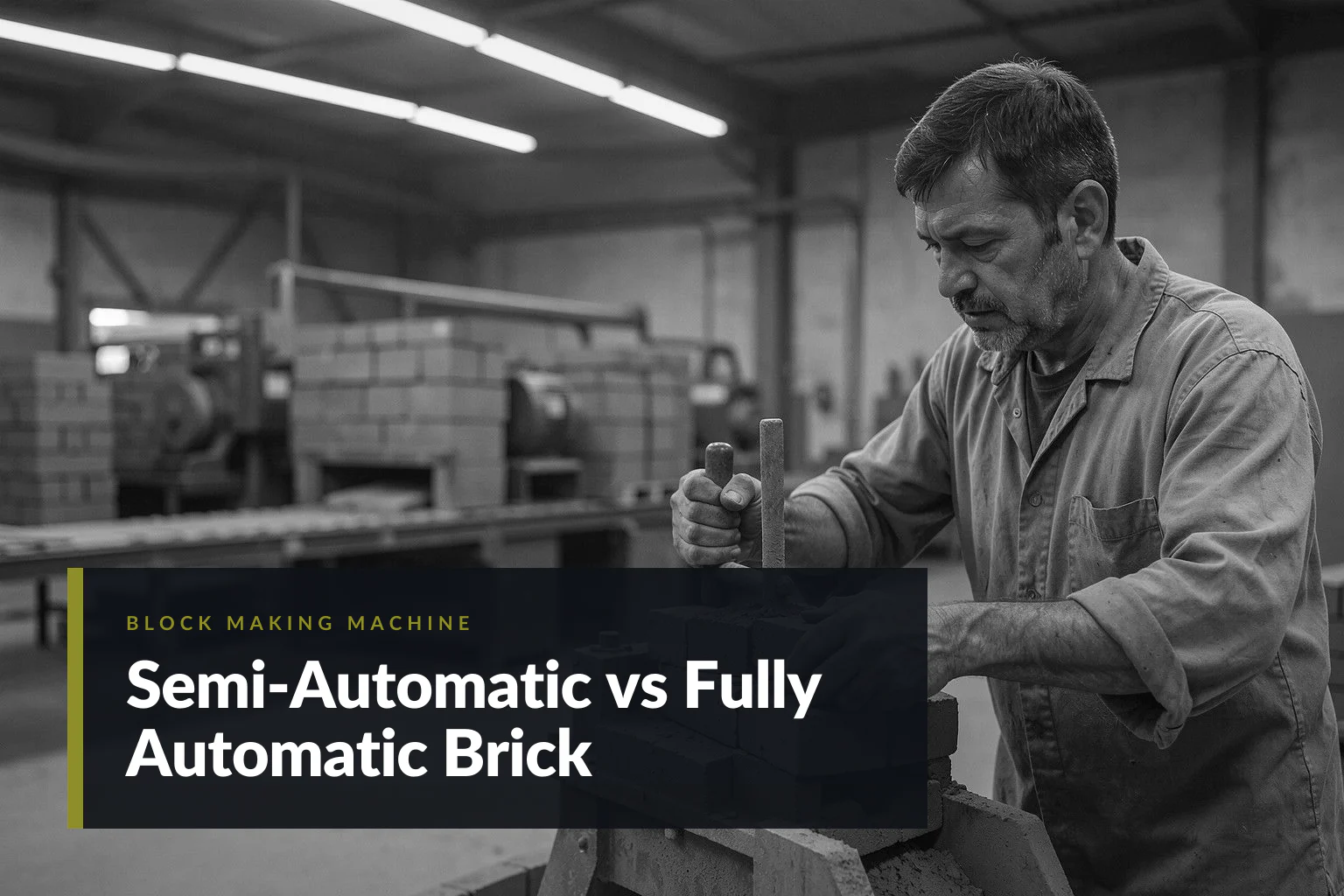
Choosing the right brick making machine is one of the most consequential decisions a construction business or block manufacturing operation can make. The equipment you select directly affects your production output, labor costs, product quality, and long-term profitability. For buyers evaluating their options, the central question often comes down to this: should you invest in a semi-automatic system or go all-in on a fully automatic line?
Both configurations have earned their place in the industry, but they serve different operational needs, budget realities, and growth strategies. Understanding the trade-offs between automation level, capital outlay, and daily throughput is essential before signing a purchase order. This article breaks down the key differences to help you determine which path aligns with your business goals.
Cost and Initial Investment
The most immediate difference between the two machine types is the upfront price tag. Semi-automatic machines are significantly more affordable, making them an attractive entry point for startups, small-scale producers, and businesses operating in markets where capital is limited. A quality semi automatic brick making machine can deliver reliable performance without requiring the six-figure investment that often accompanies a fully automated production line.
Fully automatic machines, by contrast, represent a major capital commitment. They include advanced control systems, material handling robotics, automated pallet feeders, and sophisticated curing management. The total installation cost can be three to five times higher than a comparable semi-automatic setup. However, this premium buys a level of throughput and labor reduction that can justify the expense for high-volume operations.
Beyond the machine itself, buyers must account for installation, training, and infrastructure. Semi-automatic units typically require less specialized electrical work and can be operated in smaller facilities. Fully automatic lines often demand reinforced flooring, three-phase power, conveyor systems, and more extensive factory layout planning.
Production Capacity and Throughput
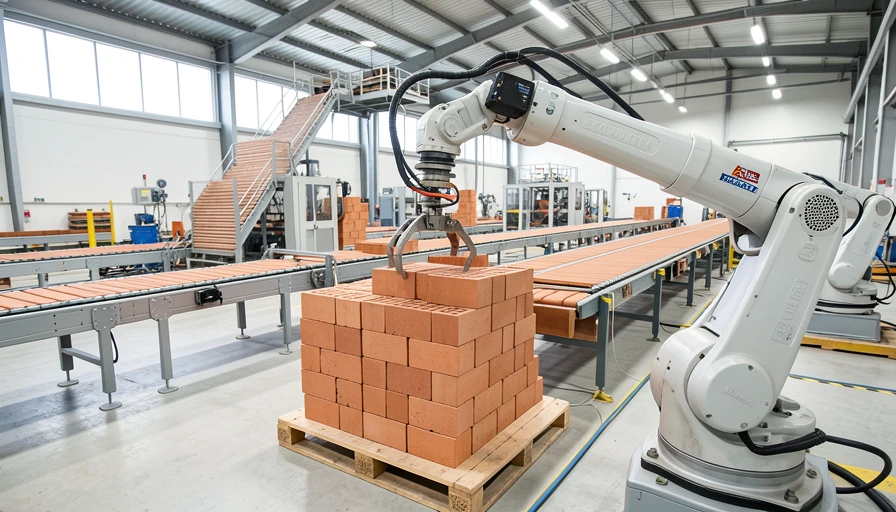
When output targets climb above a certain threshold, the fully automatic machine begins to pull ahead. These systems run continuously with minimal human intervention, producing a consistent stream of blocks hour after hour. A single fully automatic line can generate thousands of blocks per shift, depending on the model and mold configuration.
Semi-automatic machines, while capable of solid production volumes, rely on operators for several steps in the cycle. Loading raw materials, removing finished blocks, and managing mold changes all require manual effort. This introduces natural pauses into the workflow. For a business producing 500 to 2,000 blocks per day, this pace is perfectly adequate. But for operations targeting 5,000 or more blocks daily, the semi-automatic approach becomes a bottleneck.
The key metric to evaluate is not just peak speed but sustained output over a full workday. A fully automatic machine maintains consistent cycle times from the first block to the last. A semi-automatic machine's output can vary depending on operator fatigue, shift changes, and material handling speed.
Labor Requirements and Skill Level
Labor dynamics differ sharply between the two systems. A semi-automatic machine typically requires a team of three to five workers per shift. These operators handle material feeding, block removal, stacking, and machine control. The skill requirements are moderate — most workers can be trained in a few days to operate the equipment safely and productively.
Fully automatic machines dramatically reduce direct labor. A single operator can oversee an entire production line, monitoring control panels and handling quality checks rather than performing physical tasks. This frees up workers for other roles such as maintenance, quality control, and logistics.
However, the operator of a fully automatic system needs a higher skill level. Troubleshooting programmable logic controllers, adjusting sensor settings, and diagnosing automated material flow issues require technical training. Businesses must factor in either hiring more skilled technicians or investing in manufacturer-provided training programs.
For regions where labor is abundant and wages are moderate, the semi-automatic approach often makes financial sense. Where labor costs are high or skilled workers are scarce, the automation investment pays for itself more quickly.
Flexibility and Product Changeovers
One underappreciated advantage of semi-automatic machines is their flexibility. Changing mold configurations to produce different block sizes, paver shapes, or hollow blocks is a straightforward process that a skilled operator can handle in under an hour. This makes semi-automatic lines ideal for businesses that serve diverse customer orders and need to switch products frequently throughout the day.
Fully automatic machines can also handle mold changes, but the process is more involved. The system must be reprogrammed, material feed rates adjusted, and curing parameters recalibrated. While some high-end fully automatic lines feature quick-change systems, the typical changeover takes longer and may require a production halt of several hours.
For a business that produces a single block type in high volume day after day, this is not a concern. But for a manufacturer that supplies multiple products — standard blocks, interlocking pavers, curb stones, and specialized shapes — the flexibility of a semi-automatic setup can be a genuine competitive advantage.
Maintenance and Reliability
Semi-automatic machines have fewer electronic components and simpler control systems. This translates to lower maintenance complexity. Many repairs can be performed by local mechanics using standard tools. Spare parts are generally less expensive, and the machine can often be kept running with basic preventive maintenance.
Fully automatic machines incorporate hydraulic systems, pneumatic actuators, sensors, and computerized controls. When something goes wrong, diagnosing the issue may require specialized knowledge. Downtime can be costly not only in lost production but also in technician fees and waiting for replacement parts.
That said, fully automatic machines from reputable manufacturers are engineered for reliability. With proper maintenance, they can run for years with minimal unplanned downtime. The trade-off is that maintenance must be more systematic and the operator must follow stricter schedules for lubrication, filter changes, and system inspections.
The right machine is not the most advanced one — it is the one that matches your production volume, labor situation, and growth trajectory.
Making the Right Choice for Your Operation
There is no universal answer to the semi-automatic versus fully automatic question. The right decision depends on your specific business context.
If you are starting a new block manufacturing venture with limited capital, serving a local market with moderate demand, and have access to reliable labor, a semi-automatic machine offers an excellent balance of cost, capability, and flexibility. It lets you establish your business, build a customer base, and generate revenue without taking on heavy debt. As your orders grow, you can add additional machines or eventually step up to a fully automatic line.
If you are an established producer with high-volume contracts, tight margins where labor costs are a major factor, and a need for consistent round-the-clock output, the fully automatic route is the logical next step. The higher initial investment is offset by lower per-block production costs, reduced labor overhead, and the ability to fulfill large orders with predictable quality.
Many successful block manufacturers follow a phased approach. They begin with a semi-automatic machine to learn the market and refine their product mix. As demand grows, they integrate a fully automatic line for their flagship products while keeping the semi-automatic machine for specialty runs and backup production.
At Lontto, we advise every buyer to conduct a thorough needs analysis before making a decision. Calculate your target daily output, map out your available labor force, and project your growth over the next three to five years. The machine that fits today may not be the one you need tomorrow — but with careful planning, your equipment investment can carry your business forward through every stage of expansion.