
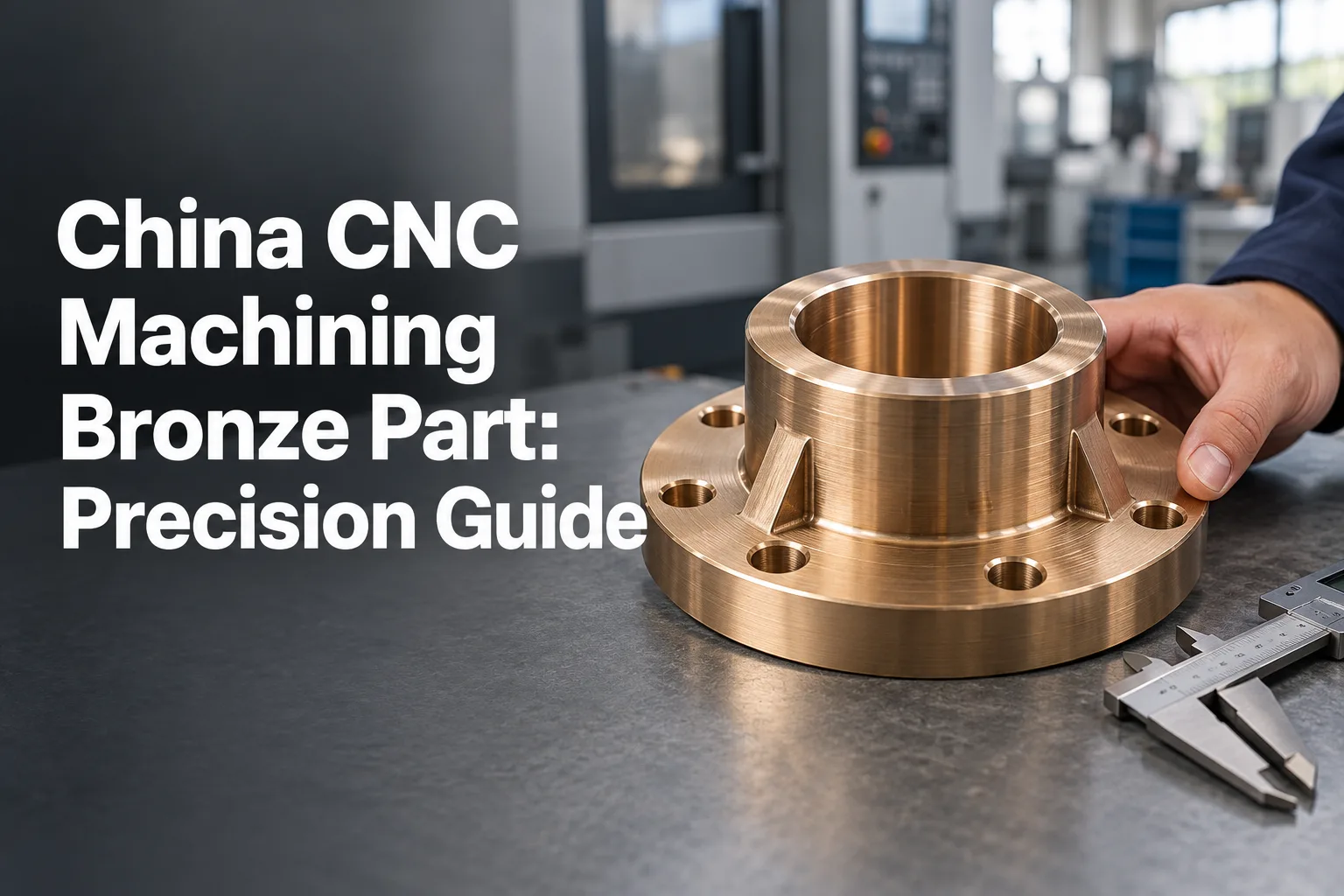
For engineers and procurement professionals sourcing custom metal components, bronze offers a compelling combination of strength, corrosion resistance, and machinability. When paired with the advanced capabilities of China-based CNC machining, bronze parts can be produced at tolerances that meet the most demanding specifications. This guide covers the essential factors to consider when ordering a china cnc machining bronze part, from material selection to quality assurance.
Why Bronze for Precision CNC Machining
Bronze is an alloy primarily composed of copper and tin, with a typical composition of around 88% copper and 12% tin. Its golden-brown appearance and excellent corrosion resistance have made it a material of choice for centuries, from ancient tools to modern industrial components. In CNC machining, bronze stands out for several practical reasons.
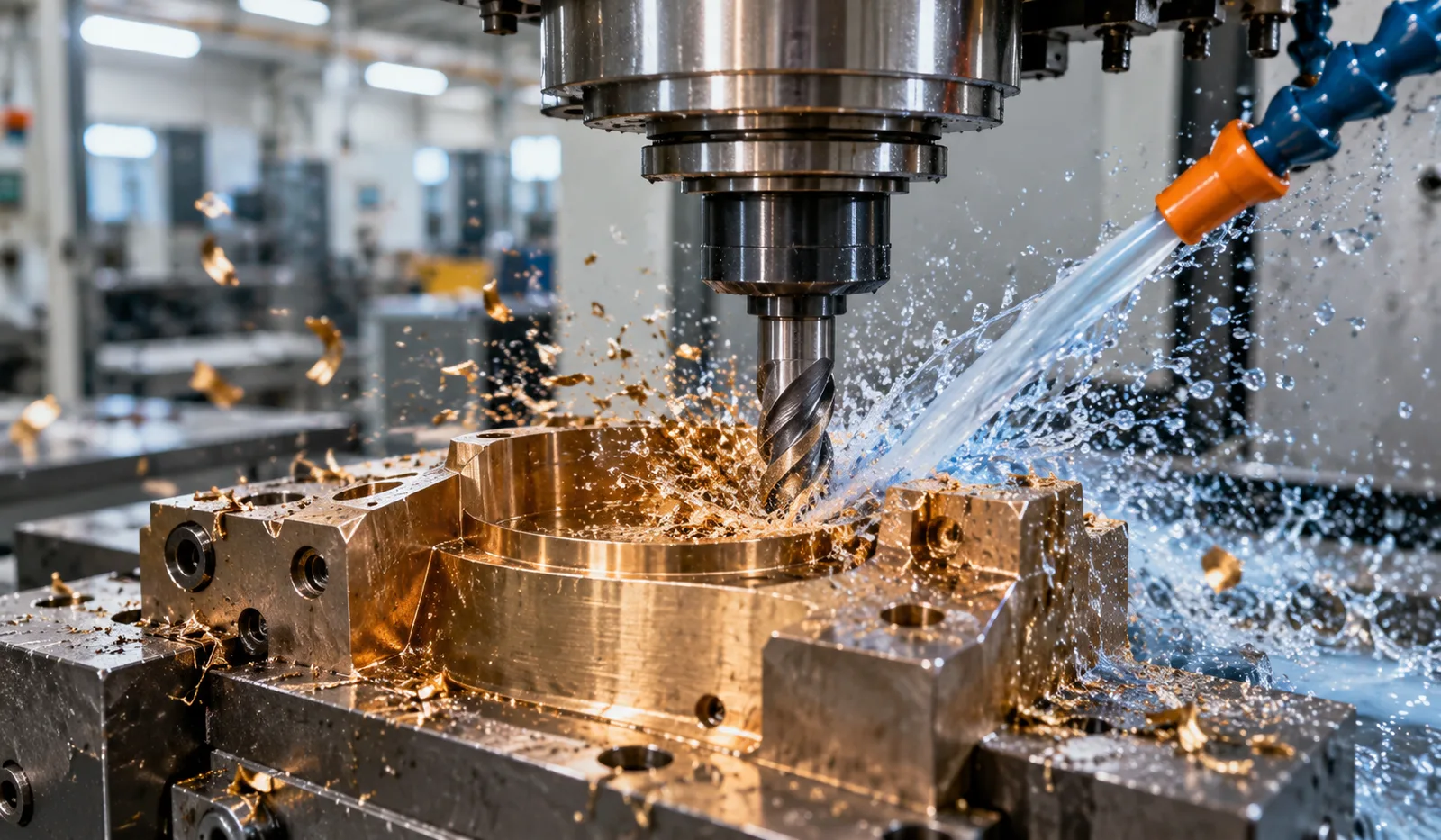
The material is relatively soft compared to steel, which allows for high-speed milling with less tool wear. Bronze chips break cleanly during cutting, reducing the risk of tool sticking and enabling a superior surface finish. Its natural lubricity — a waxy feel that reduces friction — makes it ideal for bearings, bushings, and marine hardware. Unlike many plastics, bronze maintains dimensional stability under load and resists deformation in high-temperature environments.
For engineers designing parts that must endure saltwater, chemical exposure, or continuous mechanical wear, bronze often outperforms both standard steels and aluminium alloys. The alloy’s antimicrobial properties also make it a preferred material for food-processing and medical equipment components.
How China CNC Machining Delivers Precision Bronze Parts
China has become a global hub for precision CNC machining, with facilities operating hundreds of advanced multi-axis machines capable of holding tolerances down to ±0.003 mm. When machining bronze, this level of precision is achievable because of the material’s predictable chip formation and low internal stress.
Machine Capabilities
A typical high-capacity China CNC facility, such as XTJ CNC with over 120 advanced machines, can handle complex geometries in bronze that would be difficult or cost-prohibitive with other manufacturing methods. Five-axis machining centres allow for single-setup production of intricate contours, reducing both lead time and the risk of alignment errors. For bronze parts, this means tight-fitting threads, smooth bearing surfaces, and consistent wall thicknesses across production runs.
No Minimum Order Quantities
One of the major advantages of working with an experienced China CNC machining partner is the flexibility in order volumes. Many shops, including those serving the US and European markets, accept low-volume runs and even single prototype parts. This is especially valuable when testing a china cnc machining bronze part design before committing to larger production.
Rapid Prototyping
With turnaround times as short as five days for prototypes, China-based CNC services allow engineers to validate form, fit, and function quickly. The typical workflow involves submitting a CAD file, receiving a design-for-manufacturability (DFM) analysis, approving a transparent quote, and then launching production with regular progress updates.
Quality Control and Certification Standards
When sourcing bronze CNC parts from China, certifications provide a reliable benchmark for quality management. Two of the most important standards to look for are ISO 9001:2015 and IATF 16949.
ISO 9001:2015 certification ensures that a facility maintains documented quality management systems covering everything from raw material inspection to final part measurement. IATF 16949 goes further, applying the rigorous automotive-sector requirements for consistent quality, defect prevention, and continuous improvement.
Inspection Methods
Reputable CNC machining providers use coordinate measuring machines (CMM) and other metrology equipment to verify critical dimensions on every batch. For bronze parts, surface finish and porosity are also checked, as these affect both performance and appearance. Full traceability — the ability to track a part back to the specific machine, operator, and material lot — is standard in ISO-compliant shops.
Certifications to Look For
-
ISO 9001:2015 — General quality management
-
IATF 16949 — Automotive quality standard
-
RoHS and REACH compliance — Restriction of hazardous substances
These certifications are not just paperwork; they reflect a systematic approach to catching errors before parts ship. For buyers unfamiliar with overseas suppliers, asking for current certificates and recent audit reports is a reasonable and expected step.
Applications of Bronze CNC Parts Across Industries
Bronze CNC machined components appear in a wide range of industries, each benefiting from the alloy’s unique properties.
Marine and Offshore
Bronze resists saltwater corrosion far better than steel or aluminium. Propellers, valve bodies, propeller shafts, and underwater fittings are commonly machined from nickel-aluminium bronze or manganese bronze. These alloys maintain strength in thin sections and resist dezincification, a form of corrosion that can weaken brass fittings.
Industrial Machinery
Bushings, gears, and wear plates made from bronze reduce the need for lubrication in high-load, low-speed applications. The material’s ability to absorb vibration and resist galling (a form of adhesive wear) makes it a reliable choice for heavy equipment.
Electrical and Instrumentation
Bronze is non-sparking and has good electrical conductivity. Connectors, switchgear components, and instrument housings are often CNC machined from bronze to ensure reliable grounding and long service life in hazardous environments.
Automotive and Transportation
While aluminium is the go-to metal for many CNC parts due to its light weight and low cost, bronze is specified where wear resistance and corrosion performance are critical — for example, in gear selector forks, bearing retainers, and fuel system fittings. Automotive manufacturers expect their CNC partners to meet rigorous quality standards, and certified suppliers with IATF 16949 compliance are well positioned to deliver.
Choosing the Right China CNC Machining Partner
Selecting a supplier for your bronze CNC parts involves more than comparing price per unit. Consider these factors when evaluating potential partners.
Experience with Bronze
Not all CNC shops have experience machining bronze. The alloy behaves differently from aluminium or steel, and tool speeds, feed rates, and coolant selection must be adjusted accordingly. Look for a provider that lists bronze among its standard materials and can provide case studies or sample parts.
Communication and Support
Time zone differences can be a hurdle, but many China-based CNC services have dedicated English-speaking project managers and sales teams based in the US or Europe. XTJ CNC, for example, maintains a sales and support centre in Shenzhen and a US address in Carmel, Indiana, making it easier to coordinate quotes, design reviews, and shipping logistics.
Transparent Pricing
A reliable partner will provide a detailed quote that breaks down material costs, machining time, finishing operations, and shipping. Avoid suppliers that are vague about how they calculate pricing or that refuse to discuss design-for-manufacturability improvements. A good DFM review can often reduce costs by simplifying features without compromising function.
On-Time Delivery
With on-time delivery rates of 99% or higher reported by top China CNC machining services, schedule reliability is a realistic expectation. Ask about production lead times for bronze parts specifically, as some materials require slower machining speeds that may affect turnaround.
Final Considerations
Bronze remains a trusted material for applications that demand durability, corrosion resistance, and dimensional stability. China CNC machining services now offer the precision, speed, and flexibility to produce bronze parts that meet international quality standards — often at a fraction of the cost of domestic machining. By choosing a certified, experienced partner and communicating your requirements clearly, you can achieve reliable results for prototypes and production runs alike. Whether you are sourcing a single custom part or scaling up a full manufacturing program, the combination of bronze’s proven properties and China’s advanced CNC capabilities is worth serious consideration.